
Value of the Forgotten in The Long Road to the Director’s Chair
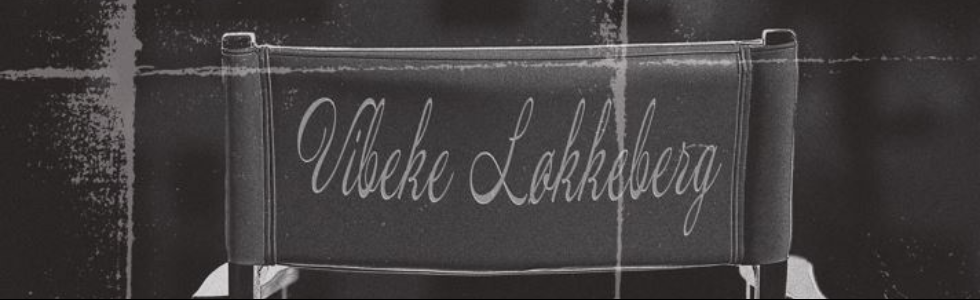
The Long Road to the Director’s Chair takes the viewers to the 1970s as witnesses to the conversations between Løkkeberg and several female filmmakers from different continents. Throughout the film, we watch the interviews Løkkeberg conducts with the other female filmmakers, accompanied by shots of the environment and people in attendance. Contents of the interviews range from structural oppression that female filmmakers face to the lack of creative independence and reproductive autonomy. One could describe The Long Road to the Director’s Chair as a time capsule or a relic from the past. However, every subject mentioned in the interviews can easily be considered highly relevant today as they were more than fifty years ago. As the title of the documentary suggests, it once again reveals the long road women must conquer to reach where they want to be, contrary to men in the same position. At the same time, I believe what makes The Long Road to the Director’s Chair remarkable is not only the story it tells but the fact that it transforms the rediscovery of the footage itself into an argument about what and whom the history chooses to remember. One of the questions that can come to mind after watching the film could be: Whose images are preserved, and whose are lost? As an answer, the film positions the archive as a site of both exclusion and resistance, by showing how women’s creative labor has been routinely undervalued and under-protected, while simultaneously proclaiming how the reuse of archival material can transform it into a political message.
From a feminist perspective, it can be said that the question of value lies at the heart of archival politics. As it is stated in Archives, Records, and Power: The Making of Modern Memory, “Archives are established by the powerful to protect or enhance their position in society. Through archives, the past is controlled. Certain stories are privileged and others marginalized" (Schwartz and Cook, 1). Therefore, traditional archives, such as national museums and libraries, can often be seen as entitling works that conform to dominant aesthetics or commercial standards like films by men, films with high budgets and with distribution. Accordingly, most of the time, women’s histories and stories are not simply lost by accident but neglected by design. The Long Road to the Director’s Chair illustrates this argument through content and form. The neglect can be simply observed within the explanatory text that is seen before the end credits, with how “After failing securing a buyer, the footage was lost for almost 50 years.” and how after the footage’s rediscovery, “At the time, it lacked funding to be produced.” While these alone could show the value given to a story about women by a woman, the rediscovered rolls of film, as seen in several scenes throughout the documentary as well, bear the marks of neglect with scratches, missing sound and incomplete footage, and these become visible signs of what cultural institutions deem disposable. Besides, in an interview with Gaby Babić and Barbara Wurm, Løkkeberg reveals that much of the 1973 footage had been stored without proper cataloging. This can underscore how women filmmakers might experience the struggle of reclaiming labor that institutions deem irrelevant or unworthy.
Therefore, by reclaiming the footage and foregrounding the fragility of its material, Vibeke Løkkeberg demonstrates that feminist archival practice is not about nostalgia but intervention. By re-editing the lost and forgotten footage into a new narrative, she reframes the archive as a living space where the past can confront the present. Thus, the rediscovered footage of women filmmakers discussing creative autonomy in 1973 resonates powerfully with contemporary debates over bodily autonomy and gendered censorship in global media. With this, it can be said that the message of The Long Road to the Director’s Chair is clear: What institutions neglect, feminist filmmaking can revive and, in doing so, create new boundaries for its historical and cultural value.
Sources
Schwartz, Joan M., and Terry Cook. “Archives, Records, and Power: The Making of Modern Memory.” Archival Science, vol. 2, 2002, pp. 1–19. Springer, https://doi.org/10.1007/BF02435628.
“Interview: We Cannot Just Continue Like We Were Before.” Arsenal – Institut für Film und Videokunst e.V., 2025, www.arsenal-berlin.de/forum-forum-expanded/programm-forum/forum-special-2025/the-long-road-to-the-directors-chair/interview-we-cannot-just-continue-like-we-were-before
The article was created as part of the UniVerzió program, in collaboration between the Verzió Film Festival and the Department of Film Studies at Eötvös Loránd University. Instructor: Beja Margitházi.